

Investment Outlook: Why G+32 Building Heights are Securing Excellent Capital Valuation Appreciation
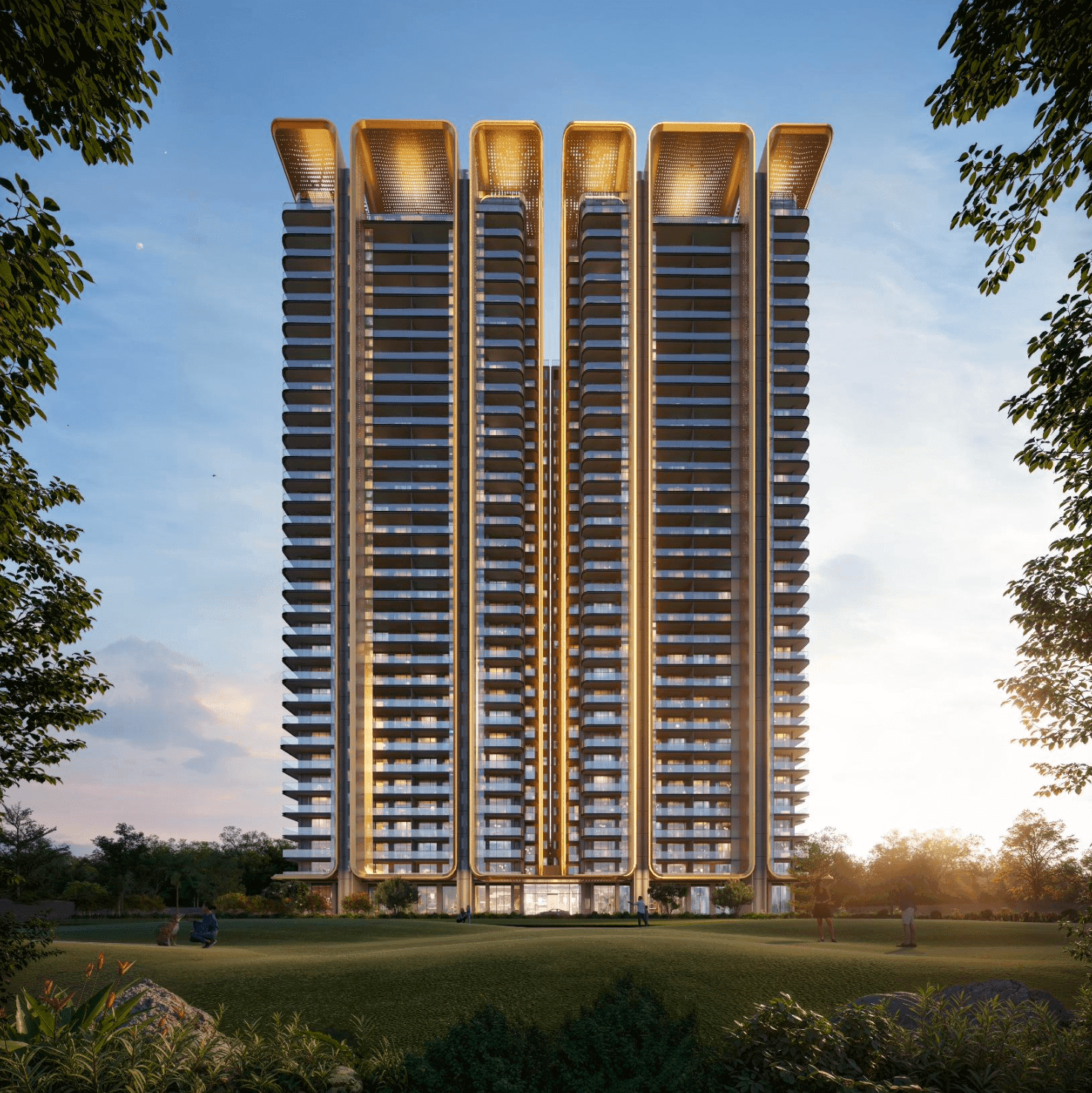
G32 Building Valuation is becoming a decisive metric for buyers and investors considering taller mid-rise projects, and in this analysis I explain why G+32 building heights—like the developments rising on Dwarka Expressway in Sector 113—are attracting premium capital appreciation and resilient demand.
G32 Building Valuation: Why G+32 Heights Convert to Real Investment Premiums
Why this matters for capital markets
Institutional and private buyers now price in structural features beyond location. Height, floor plate efficiency, and vertical services influence yield expectations. Developers who deliver G+32 towers often command higher effective prices per square foot because these buildings support larger-format residences, premium views, and efficient amenity stacking. As a result, G32 Building Valuation reflects both physical asset value and market perception of long-term scarcity.
Who benefits from this valuation lens
High-net-worth buyers, premium end-users and long-term capital allocators benefit most. Investors seeking steady rental yields find G+32 formats attractive because they often host larger units—such as 4 BHK+S and 5 BHK+Lounge layouts—that appeal to affluent families. Meanwhile, developer-backed funds and family offices use this valuation approach to benchmark resale potential at completion.
What makes G+32 valuation unique
G+32 Building Valuation captures three value drivers: vertical density without supertall construction complexity, economies of shared amenities, and enhanced views that command price uplifts. Unlike low-rise clusters, a G+32 project typically upgrades the perceived address quality. Consequently, buyers assign a premium that compounds as surrounding infrastructure matures.
A practical expectation for buyers and advisors
Expect a phased premium. Early purchasers get price advantage; post-handover the market often compresses yield expectations and increases resale values. Therefore, an under-construction project on Dwarka Expressway with G+32 towers can show notable capital appreciation by the time core connectivity and retail nodes complete.
Project Review: How the Dwarka Expressway G+32 Project Aligns with Market Demand
Why this development matters locally
The featured development in Sector 113 offers typologies tailored to premium family buyers—4.5 BHK and 5 BHK units with large carpet areas—aligning supply with demand.
Who the project suits best
This project suits multi-generational families, executives who value privacy and space, and investors targeting high-end leasing segments. Configurations such as 4 BHK+S (2,995–3,745 sq. ft.) and 5 BHK+Lounge (7,480 sq. ft.) attract households that want trophy homes but within a suburban growth corridor.
What makes the project stand out
Large-format units and a G+32 vertical envelope allow the developer to provide stacked premium amenities and panoramic vistas. Given the project’s under-construction status, buyers can secure a structural price while expecting capital valuation appreciation once core infrastructure on Dwarka Expressway completes.
Practical insight for purchase timing
Under-construction opportunities usually deliver better entry pricing. With a 25:25:50 PLP payment plan and starting price reference available on the developer’s listing, early commitment reduces effective acquisition cost. Investors should model two scenarios: completion-driven appreciation and hold-for-rent yield progression.
| Project Attribute | Detail |
|---|---|
| Location | Dwarka Expressway, Sector 113 |
| Typology | 4.5 BHK & 5 BHK (Large-format residences) |
| Sizes (sq. ft.) | 4 BHK+S – 2995, 3485, 3745; 4 BHK+Lounge – 5960; 5 BHK+Lounge – 7480 |
| Price per sq. ft. | 23,000 |
| Payment Plan | 25:25:50 PLP — Under Construction |
| Availability | Under Construction — Starting price listed on developer page |
Location Guide: Why Dwarka Expressway and Sector 113 Matter to Buyers
Why the corridor changes investment dynamics
Dwarka Expressway evolved from an arterial road to a strategic urban spine. It shortens commute to central business districts and integrates with airports and ring roads. Consequently, projects along this corridor experience faster liquidity and price convergence with core-city benchmarks.
Who benefits from the location today
Commuters, professionals in nearby corporate hubs, and families who value airport connectivity benefit most. Additionally, buyers seeking long-term capital appreciation find this corridor attractive because infrastructure projects accelerate neighborhood maturation.
What unique locational advantages Sector 113 offers
Sector 113 blends residential density with upcoming retail and institutional projects. The corridor supports premium residential typologies that need both space and connectivity—features the G+32 development leverages by offering large units and amenity orchestration at height.
Practical considerations for relocation or rental
Expect phased infrastructure completion timelines. Prospective residents should map expected travel times during peak hours and note planned retail completions. Renters value immediate connectivity; owner-occupiers can prioritize long-term appreciation and lifestyle benefits.
Investment Analysis: Calculating Appreciation Potential for G+32 Properties
Why structuring matters in valuation models
Valuation for taller mid-rise properties requires layering cap-rate shifts, unit mix premiums, and construction-risk discounts. G+32 buildings often attract a lower cap-rate due to perceived stability and scarcity of large-format units, which increases valuation multiples.
Who should run what scenarios
Equity investors should run scenario analysis for five- and ten-year holds. Lenders will focus on loan-to-value at completion. Buyers planning to rent need to test vacancy and rental growth assumptions specific to large units in Sector 113.
What variables drive appreciation most
Three variables dominate: infrastructure completion, absorption of similar large-format supply, and macro interest rate movements. For the Dwarka Expressway project, monitor expressway widening, retail node openings, and financial conditions that affect mortgage pricing.
Practical valuation example
Use the project’s price per sq. ft. of 23,000 as a baseline. If a relative premium of 8–12% emerges for completed G+32 towers with similar product, investors could model a conservative 6–8% realized appreciation at stabilization and a more aggressive 12–18% in best-case scenarios within three years of completion.
| Assumption | Conservative | Optimistic |
|---|---|---|
| Base price per sq. ft. | 23,000 | 23,000 |
| Expected appreciation (3 years) | 6–8% | 12–18% |
| Driver | Infrastructure completion | Strong demand + limited supply |
Buyer Guide: Selecting Units Within a G+32 Scheme
Why unit selection impacts long-term value
Within tall mid-rise towers, floor level, orientation, and plan efficiency alter resale and rent. High floors typically command view premiums and quieter interiors. In large units, circulation ratios and service areas determine livability and market acceptance.
Who should prioritize which features
Owner-occupiers prioritize orientation, daylight, and privacy. Investors focus on layouts that attract premium tenants—3.5- to 5 BHK equivalents with servant quarters and flexible family areas. The projects in Sector 113 offer both 4 BHK+S and 5 BHK+Lounge configurations, catering to both segments.
What features to insist on during due diligence
Check structural engineer reports for vertical load plans, elevator counts relative to unit density, and MEP zoning. Also verify amenity distribution and service corridors to avoid future operational bottlenecks. These checks minimize depreciation risks for tall buildings.
Practical negotiation levers
Use payment plan flexibility to negotiate effective price. The 25:25:50 PLP structure gives leverage at two construction milestones. Additionally, request clear timelines for completion to align financing and rental forecasts.
Feature Highlight: How Large-format Units and Amenities Drive Premiums
Why large-format apartments lift value
Larger units provide lifestyle differentiation and command higher per-unit revenue. Families pay for utility: space, separate lounges, and servant accommodation. In a G+32 project, these units also benefit from unobstructed views and elevated amenity access.
Who values these features most
Affluent households and long-stay tenants value these attributes most. Corporate leases for senior executives often specify larger layouts and privacy; thus, such units enjoy lower vacancy risk and stronger rent retention.
What to expect from amenity stacking in G+32 projects
Amenity design often stacks pools, lounges, gyms, and landscaped terraces to serve residents vertically. This approach maximizes common space efficiency and supports social cohesion—both factors that buyers reward monetarily.
Practical lifestyle insight
Assess amenity management plans and service charges. Well-run amenities preserve capital values. For under-construction projects, ask for operational estimates to gauge long-term running costs and net yield impacts.
Project Comparison: How This G+32 Development Stands Versus Alternatives
Why a direct comparison matters to investors
Comparing delivery timelines, unit mixes, and price per sq. ft. helps identify relative upside. Projects on Dwarka Expressway vary by height and product. A G+32 offering with large units typically trades at a premium to low-rise gated layouts.
Who should use the comparison matrix
Buyers in the market for large-format homes should run comparisons to prioritize value per usable square foot. Institutional investors use matrices to assess portfolio fit, while private buyers determine lifestyle trade-offs.
What to include in a practical comparison
Include price per sq. ft., effective saleable area, expected maintenance, timeline to completion, and proximity to key transport nodes. Also compare elevator-to-unit ratios and availability of exclusive parking.
| Feature | G+32 Project (Sector 113) | Low-rise Alternatives |
|---|---|---|
| Unit Mix | Large 4–5 BHK formats | Smaller 2–3 BHKs |
| Price per sq. ft. | 23,000 | Lower but with less upside |
| Appreciation Potential | Higher due to scarcity | Moderate |
| Maintenance | Higher; premium amenities | Lower |
Pricing & Payment: How to Read the 25:25:50 PLP and Value Impact
Why payment structure affects effective yield
A 25:25:50 PLP plan spreads payments across construction milestones, lowering initial cash outlay. This matters because financing costs and opportunity cost of capital influence net returns. A balanced PLP can improve IRR for early buyers.
Who benefits from staged payment plans
Investors with liquidity constraints or those who prefer to align payments with construction progress gain the most. Buyer-agents should model cash flow under different mortgage structures to assess net cost.
What to verify in the payment schedule
Confirm the definition of milestones, penalties for delays, and linkage to occupancy certificate. Also cross-check the starting price quoted on the developer page and any escalation clauses.
Practical negotiation tip
Negotiate either clubbed flat discounts for larger floor plates or construction-linked rebates. Use market comparables from Dwarka Expressway to justify requests. Keep all changes documented in the sale agreement.
FAQ
How does G32 Building Valuation differ from standard per-square-foot metrics?
G32 Building Valuation incorporates qualitative premium drivers such as vertical amenity stacking, view quality, and scarcity of large-format units. It still uses price per sq. ft. as a baseline but adjusts for unit mix and building-level advantages.
What is a realistic appreciation timeline for a G+32 project on Dwarka Expressway?
Expect initial appreciation around completion as infrastructure comes online—typically 2–4 years post purchase for under-construction buys. Full market recognition may take 3–5 years, depending on macro conditions and corridor development pace.
Is the 25:25:50 PLP favorable compared to other plans?
It balances upfront burden and completion risk. Many buyers favor PLPs because they reduce early capital lock-in. Compare interest outflows under different mortgage schedules to determine overall cost-effectiveness.
How should I evaluate rental yield for large 4–5 BHK units?
Calculate gross yield using achievable rents for comparable units in Sector 113, then subtract realistic vacancy and maintenance. Large units usually yield lower percentage but higher absolute rent, which suits investors seeking stable cash flows.
What due diligence matters most for a G+32 building?
Focus on structural plans, elevator capacity, fire and evacuation designs, and service area efficiency. Additionally, review the developer’s track record delivering tall mid-rise towers and confirm clear timelines for infrastructure development.
Will higher maintenance charges negate capital appreciation?
Not necessarily. While premium amenities raise maintenance, well-capitalized projects with efficient operations sustain higher valuations because buyers pay for lifestyle. Model net yields after operating expenses to evaluate real return.
How does the project in Sector 113 compare to central-city premium projects?
Per sq. ft. prices may be lower than core-city trophy buildings, but the Dwarka Expressway project offers larger usable areas and potentially faster appreciation as the corridor develops. For buyers seeking space and long-term upside, it can be a superior trade-off.
Can early buyers lock better prices for G+32 units?
Yes. Under-construction pricing often offers entry discounts. Early buyers who properly assess construction risk and infrastructure timelines can secure attractive effective prices and benefit from subsequent valuation uplift.
What macro risks could slow appreciation?
Interest rate hikes, construction delays, or a sudden supply influx of similar large-format units can dampen short-term appreciation. Diversify risk by timing purchases against confirmed infrastructure milestones.
G32 Building Valuation is not a single-number exercise; it reflects a layered market judgment that blends height-driven scarcity, unit-scale desirability, and corridor maturation. For buyers and investors focused on Dwarka Expressway Sector 113, the large-format G+32 offering presents a clear value proposition—space, connectivity, and structured payment flexibility—backed by a practical path to capital appreciation as infrastructure and demand converge.

