

Sobha Crescent Floor Plan Breakdown: Comparing the 2-Car vs 3-Car Parking Typologies
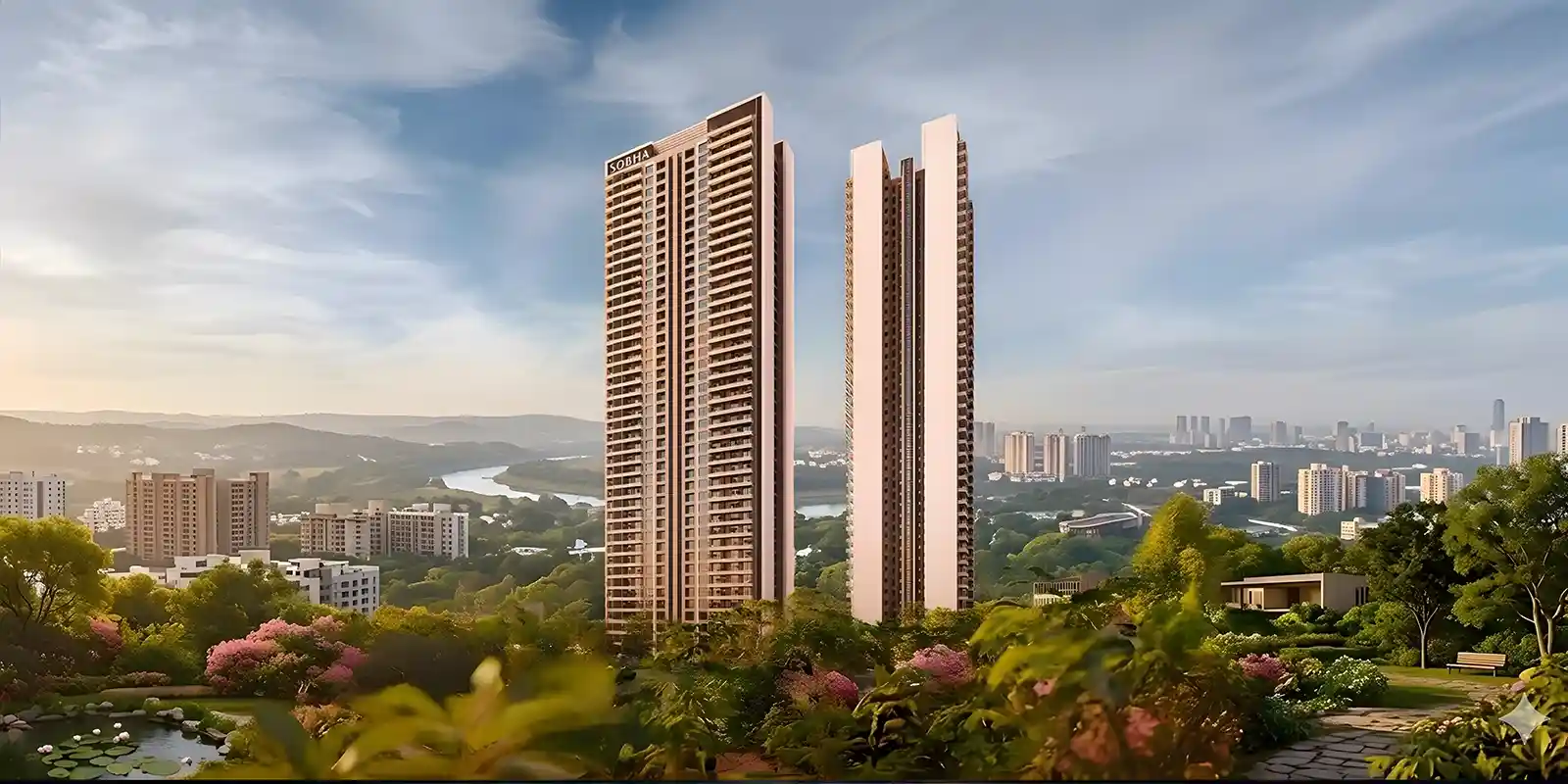
Sobha Crescent Floor Plan analysis begins here with a focused comparison of 2-car and 3-car parking typologies, and a practical look at how those choices shape living, circulation, and long-term value for buyers on Golf Course Extension Road.
Sobha Crescent Floor Plan Breakdown: Comparing the 2-Car vs 3-Car Parking Typologies
Why the Sobha Crescent Floor Plan matters for buyers
Buyers evaluate a floor plan for daily comfort and future resale value. At Sobha Crescent in Sector 63A, the layout choices for 3/3.5/4.5 BHK units directly influence livability. Furthermore, parking allocation—often overlooked—changes how residents enter, store, and use their homes.
Understanding these elements helps buyers align apartment selection with lifestyle goals. For example, professionals who commute regularly need quick access and efficient circulation. Meanwhile, larger families prioritize buffer zones between social and private spaces.
Analyzing the Sobha Crescent Floor Plan: 2-car vs 3-car layouts
Comparing 2-car and 3-car parking typologies reveals trade-offs. A 2-car layout economizes internal footprint. Conversely, a 3-car layout increases dedicated garage area and can shift internal layout proportions. Both types influence the size and placement of entry foyers, service cores, and helper rooms.
At Sobha Crescent, unit sizes range from a 3 BHK at 2,277 sq.ft. to a 4 BHK+Helper at 2,966 sq.ft. These sizes provide enough plate area to accommodate either parking typology in principle. However, the relationship between plate size and parking type sets buyer expectations for storage and amenity access.
How parking typology changes everyday living
Why this matters to daily routines
Entry and exit patterns shape morning and evening routines. If a unit is paired with a 3-car parking allocation, residents gain redundancy for guest cars. Additionally, extra parking reduces the need to shuffle vehicles for errands. As a result, families experience less friction during peak hours.
On the other hand, a 2-car arrangement often frees up valuable internal area for larger living rooms or wider balconies. Consequently, the social heart of the home can feel more expansive and comfortable for gatherings.
Who benefits from each parking configuration
Two principal buyer profiles emerge. First, urban families with two cars and occasional guests benefit from a 2-car layout paired with efficient storage. Second, multi-car households, collectors, or those who run ride-share services need 3-car parking. Therefore, understanding household vehicle needs clarifies which typology suits you.
Investors also make different choices. Those targeting long-term tenant profiles choose layouts that match local demand. Meanwhile, end-users pick comfort and practical convenience.
Design trade-offs: space allocation, circulation, and service cores
What makes a parking-forward plan unique
When designers allocate space for three parking bays, they usually re-balance the floor plate. They may reduce corridor depth and tighten secondary room dimensions. Consequently, service cores shift to maintain utility access. As a result, kitchens and helper rooms often become more compact.
This configuration can produce a more compact social zone. However, creative planning offsets constraints by extending balconies or introducing multi-purpose nooks.
Practical expectations for layout efficiency
Expect subtle impacts on daylight and cross-ventilation. A larger parking footprint often pushes private rooms toward the perimeter. Therefore, some internal rooms may receive less direct daylight unless the plan intentionally adds light wells.
At Sobha Crescent, the 3 BHK at 2,277 sq.ft. already requires disciplined zoning. Consequently, a developer choice between 2-car and 3-car typologies will influence window placement and corridor length. Buyers should ask for plan sections and sun studies before committing.
Applying the typologies to Sobha Crescent unit sizes and types
Why floor-plate scale matters for 3/3.5/4.5 BHK units
Not every parking typology fits every plate cleanly. Smaller 3 BHK plates tend to optimize internal living areas. When a 3-car parking option appears on a smaller plate, designers must compress ancillary areas.
Conversely, the 4 BHK+Helper at 2,966 sq.ft. provides breathing room. A 3-car option there will likely preserve bedroom sizes and enhance storage. Therefore, the same typology affects unit function differently across sizes.
What to ask when you tour plans at the sales office
Request these items: dimensional drawings, circulation diagrams, parking allocation maps, and service area layouts. Also, ask about mechanical limits for garage depth. Finally, confirm whether guest parking sits separately or within the unit allocation.
These details reveal real-world consequences of a parking typology choice. Furthermore, they show how developer decisions match buyer priorities.
| Unit Type | Car Parking (Hypothetical) | Primary Trade-Off | Ideal Buyer |
|---|---|---|---|
| 3 BHK — 2,277 sq.ft. | 2-car | More living area, smaller service spaces | Families prioritizing social space |
| 3 BHK + Helper — 2,669 sq.ft. | 2–3-car | Balanced living and storage, flexible helper area | Families needing a servant room or office |
| 4 BHK + Helper — 2,966 sq.ft. | 2–3-car | Preserves bedroom sizes with added garage space | Large families and long-stay guests |
Location and infrastructure: why Sector 63A supports these choices
Why Golf Course Extension Road matters to planners and buyers
Golf Course Extension Road ranks as a premium corridor in Gurgaon. Consequently, developments there respond to higher vehicle ownership. Therefore, parking typologies gain strategic importance for both buyers and architects.
Moreover, proximity to business districts increases peak traffic. As a result, parking convenience directly affects daily commute time and perceived lifestyle quality.
Who benefits from Sobha Crescent’s location advantages
Professionals working in nearby IT and corporate hubs value quick access. Also, families appreciate schools and medical access in the corridor. Sobha Crescent’s location in Sector 63A places it within practical reach of these amenities.
Therefore, buyers who commute frequently or host visiting family will value a parking typology that reduces friction at entry and exit.
Investment analysis: parking as a value driver
Why parking type affects resale and rental demand
Parking availability influences long-term marketability. Units with larger or more convenient parking command higher rental yields in car-dependent micro-markets. Furthermore, buyer pools in Sector 63A include families who prize multiple vehicle support.
As a result, a unit that matches local needs typically achieves faster tenancy and stronger resale bids.
What makes Sobha Crescent a credible option for investors
Sobha Crescent offers contemporary 3/3.5/4.5 BHK layouts with competitive plate sizes. The project sits on Golf Course Extension Road, which supports steady demand. Additionally, the listed price per sq.ft. around 25,000 indicates a premium positioning.
Investors should balance the price per sq.ft. with anticipated rental yields. Also, factor in the payment plan and construction timeline listed as under construction. These elements define holding costs and break-even timelines.
| Metric | Implication | Practical Insight |
|---|---|---|
| Price per sq.ft. | ~25,000 (project data) | Reflects premium corridor valuation; expect buyer selectivity |
| Payment Plan | Under Construction | Staged payments; cost of finance matters for investors |
| Unit Sizes | 2,277–2,966 sq.ft. | Plate sizes support varied parking strategies |
Buyer guide: matching typology to lifestyle and budget
Why you should prioritize parking decisions early
Selecting a parking typology early avoids later compromise. For instance, buyers who postpone the decision may accept a less convenient allocation. Consequently, lifestyle friction increases and perceived value drops.
Therefore, clarify your vehicle needs, guest patterns, and storage expectations before choosing a unit.
What makes Sobha Crescent suitable for different buyer profiles
Young professionals often prefer efficient 3 BHK units with larger social areas. Families with older children may value the 4 BHK+Helper for extra privacy. Meanwhile, buyers who keep multiple vehicles find a 3-car parking typology essential.
In all cases, verify parking location, access ramps, and security protocols. These items affect daily convenience and long-term maintenance costs.
Practical inspection checklist for floor plans and parking
Why a focused checklist saves time
When touring a project, time is limited. A checklist ensures you capture the right data. As a result, you make a better decision and avoid surprises after handover.
What to verify on-site or via plan packs
- Exact parking allocation and deeded space.
- Garage depth and door clearances.
- Location of guest parking and visitor flow.
- Service entry and helper room proximity.
- Natural light, ventilation, and cross-flow diagrams.
- Fire egress routes and ramp gradients affecting vehicle access.
FAQ
How many parking spaces does Sobha Crescent allocate per unit?
Allocation varies by unit type and developer policy. The project lists 3/3.5/4.5 BHK typologies and plate sizes from 2,277 to 2,966 sq.ft. Buyers should request the formal parking allocation schedule from the sales office. This document clarifies whether a unit includes 2-car or 3-car allotments and whether guest parking exists.
Does a 3-car parking typology increase the unit’s price materially?
Often, additional parking increases the purchase price or attracts extra charges. The premium depends on local demand and developer policy. Given Sobha Crescent’s price per sq.ft. around 25,000, the absolute increase can be meaningful. Ask the developer for precise pricing differentials.
Will a 3-car configuration reduce living area in the same unit size?
Yes, in many designs a larger parking footprint reduces internal non-structural area. Developers balance this by optimizing corridors and service spaces. For larger plates, like the 4 BHK+Helper at 2,966 sq.ft., the impact is smaller. Always review dimensional drawings to confirm room sizes.
Which buyers should choose a 2-car parking typology?
Buyers with two vehicles and a priority on internal living space typically favor 2-car typologies. Also, those who rely on abundant on-site guest parking or who seldom host multiple vehicles can prefer a 2-car solution. This option often trades parking for larger balconies or living rooms.
How does location on Golf Course Extension Road affect parking needs?
The corridor supports higher vehicle ownership due to workplace distribution and limited public transit alternatives. Therefore, demand for multiple parking bays tends to be strong. Buyers on Golf Course Extension Road should evaluate vehicle needs carefully against local commuting patterns.
What documents should I request before booking?
Request floor plans with dimensions, parking allocation schedules, the project brochure, and the developer’s pricing matrix. Also, obtain construction timelines since the project is under construction. These documents support a clear comparison between 2-car and 3-car options.
If I plan to rent the apartment, which parking typology improves rental yield?
Rental appeal depends on tenant type. Families and professionals who own multiple cars prefer 3-car allocations, which can lift rent and reduce vacancy. Conversely, compact units targeting single professionals perform well with efficient 2-car layouts, especially when price per sq.ft. is competitive.
Are there maintenance differences between 2-car and 3-car allocations?
Yes. Larger parking areas require more lighting, cleaning, and possibly security upgrades. Monthly maintenance charges may rise with larger parking footprints. Confirm maintenance estimates and how visitor parking is factored into recurring charges.
Can parking be sold or transferred separately in Sobha Crescent?
Policy varies by project and local regulations. Some developers attach parking to the unit deed, while others sell it separately. Verify with the sales team and review legal documents to understand transferability and ownership rights.
Choosing between a 2-car and 3-car parking typology at Sobha Crescent requires deliberate trade-offs. Consider your household’s vehicle needs, lifestyle priorities, and investment horizon. Confirm allocations, compare plate-level drawings, and weigh maintenance implications. With clear criteria and the right documentation, you can select the arrangement that maximizes daily comfort and long-term value in Sector 63A’s competitive market.

